


Combining Basement and Solar: Benefits for Homeowners

Table of Contents
Why Combining Basement and Solar Makes Sense
Solar Panels for Existing Homes: What Homeowners Need to Know
Basement-Specific Energy Loads and How Solar Addresses Them
Solar Panel and Battery Storage: Powering Your Basement
How the power flow actually works
Is a basement actually suitable for batteries and inverters?
Practical placement rules that work
Battery sizing for basement backup
What this means for your project
Home Solar System Sizing for Basement Integration
Step 1: Build a real basement load profile
Step 2: Decide what "backup" means to you
Step 3: Size the array for annual production, not just daily use
Step 4: Match battery to array and to outage goals
Step 5: Run the economics honestly
A worked example
What to ask your installer
Basement Renovation Energy Efficiency and Solar Benefits
Making the Investment: Cost, Timeline, and Home Value
Frequently Asked Questions
Last Updated: October 16, 2026
Why Combining Basement and Solar Makes Sense
Basement and solar projects often feel like separate tasks. They're not. A basement equipped with solar power and battery storage becomes the energy hub of your entire home. At First Class Roofing & Renovations Inc, we understand this connection can transform both projects.
This guide covers how combining basement and solar delivers lower bills, energy independence, outage protection, and higher home value.
Solar Panels for Existing Homes: What Homeowners Need to Know
Most existing homes can support solar. Three questions decide it:
Does your roof get good sunlight exposure?
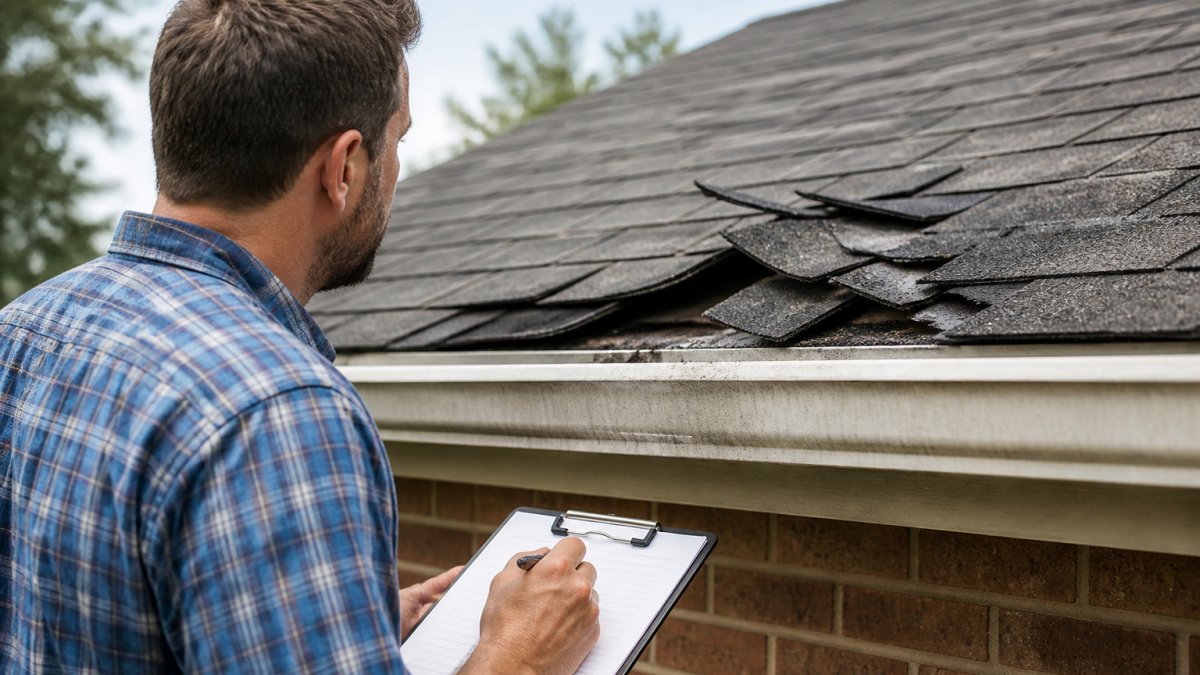
Is it in decent condition to support panels for 25+ years?
Does your electrical panel have capacity for battery storage?
A south-facing roof with minimal shade is ideal; east or west-facing roofs work with slightly lower output.
The electrical side matters as much as the roof. Panels feed power through an inverter, which becomes more complex with battery storage.
Existing homes also benefit from net metering in many regions: excess power feeds back to the grid for bill credits, so no generation is wasted.
Basement-Specific Energy Loads and How Solar Addresses Them
Basements have unique energy demands most homeowners underestimate.
Here's what actually consumes energy in a basement:
Climate control: A finished basement is heated or cooled, a significant draw especially in winter when solar output drops. A dehumidifier running 8-12 hours daily uses 300-700 watts.
Sump pump protection: A sump pump runs unpredictably when water rises, and an outage during heavy rain is exactly when you need it most.
Moisture and flood prevention: A damp basement needs continuous dehumidification.
Passive solar design: South-facing basement windows capture passive solar gain in winter, reducing heating load.
Basement loads must be included when sizing your system.
Solar Panel and Battery Storage: Powering Your Basement
Solar panels alone don't solve basement energy needs because basements draw power at night, during cloudy stretches, and during outages. Battery storage closes that gap, and the basement is often the most practical place for it, but it's a demanding environment for batteries and inverters.

How the power flow actually works
Solar panels generate DC power during daylight. A hybrid inverter converts it to AC for household use and routes surplus to the battery; when the grid drops, it islands the home and draws from the battery. For basement integration, the inverter must support:
Instant transfer to backup power (typically under 20 milliseconds)
Battery charging from solar first, grid second
Export of surplus generation for net metering credits where available
Most hybrid inverters in the Canadian market range from 5 kW to 15 kW and pair with low- or high-voltage battery cabinets; the choice affects where equipment can physically go.
Is a basement actually suitable for batteries and inverters?
Sometimes yes, sometimes no. It depends on four factors:
Temperature. Most lithium iron phosphate (LFP) batteries are rated for roughly 0°C to 45°C, with reduced charging below 5°C. An unheated basement in a cold climate can drop below that, so manufacturers require a conditioned space or heated cabinet. A finished, conditioned basement is usually fine.
Humidity and moisture. Basements are the dampest part of most homes. Manufacturers publish an IP rating and maximum relative humidity; IP20-rated equipment isn't designed for damp or flood-prone areas.
Ventilation and clearances. Even sealed batteries and inverters produce heat and, in fault conditions, off-gas.
Electrical code and permits. In Canada, installation must comply with the Canadian Electrical Code as adopted provincially or territorially, plus municipal bylaws, covering conductor sizing, disconnects, rapid shutdown, arc-fault and ground-fault protection, labeling, and the utility interconnection agreement.
Practical placement rules that work
A common pattern that passes inspection and stays serviceable:
Mount the inverter and battery on poured concrete or masonry, not drywall over a damp cavity
Keep equipment at least 15 cm off the floor on a non-combustible pad
Locate it in a utility room, not a bedroom or single-egress room
If your basement can't meet these conditions, a garage, insulated mechanical room, or exterior-rated enclosure may be better. The system still powers basement loads; the equipment just lives somewhere safer.
Battery sizing for basement backup
Sizing depends on which loads you want to survive an outage and for how long:
Basement load | Typical draw | 10 kWh battery runtime | 20 kWh battery runtime |
Sump pump (intermittent) | 800 W when running | Many hours of cycling | Multiple days of cycling |
Dehumidifier | 300-700 W continuous | 14-33 hours | 28-66 hours |
Basement LED lighting | 100-200 W | 50-100 hours | 100-200 hours |
Freezer | 100-200 W average | 50-100 hours | 100-200 hours |
Furnace blower (gas) | 300-500 W | 20-33 hours | 40-66 hours |
Real numbers depend on duty cycles, temperature, and depth-of-discharge settings. Most installers plan 1-2 days of autonomy on critical loads, not whole-home backup, unless the budget supports a much larger bank.
What this means for your project
A basement is often the right home for solar storage, but only when temperature, moisture, ventilation, clearances, and code compliance are addressed up front. Treat equipment location as a design decision, not an afterthought: get the permit, use a licensed installer, and confirm the battery's environmental rating matches your basement's real conditions.
Home Solar System Sizing for Basement Integration
Sizing a system with basement loads differs from a roof-only array. You can't just look at your average monthly bill, separate three questions: how much energy the basement uses, how much outage backup you want, and how the economics work over the system's life.
Step 1: Build a real basement load profile
Start with measured or nameplate data, not guesses:
Dehumidifier: label wattage plus actual daily run hours (a hygrometer and plug-in energy monitor give you this in a week)
Sump pump: motor horsepower, amps, and estimated run time per rain event
HVAC: furnace blower watts, or heat pump / mini-split draw if conditioned
Add these to your household total. A typical home uses roughly 20-30 kWh per day; a finished basement with climate control, dehumidification, and backup commonly adds 5-10 kWh per day, more in humid summer months.
Step 2: Decide what "backup" means to you
There are three common tiers:
Critical loads only, sump pump, dehumidifier, freezer, a few lights, internet. Usually 2-5 kWh usable.
Critical plus comfort, adds furnace blower, some outlets, a small fridge. Usually 5-10 kWh usable.
Whole-home backup, everything, including HVAC and EV charging. Usually 15-30+ kWh usable, often with a larger inverter.
Usable capacity is less than nameplate: most lithium batteries discharge to 80-90% depth-of-discharge to protect cycle life, so a 10 kWh nameplate battery delivers roughly 8-9 kWh usable.
Step 3: Size the array for annual production, not just daily use
Solar output swings hard by season: a system covering your summer load may produce less than half that in December and January. Two approaches:
Net-metering approach: size the array to offset annual kWh and let the grid absorb seasonal surplus and shortfall, usually the lowest-cost path where net metering or net billing exists.
Self-consumption approach: size the array to cover daily use plus battery charging, accepting winter shortfalls, common where export credits are low.
A simple planning formula:
Daily energy need (house + basement): 35 kWh
Peak sun hours: 3-5 depending on location and season
Required array: 35 ÷ 4 ≈ 8.75 kW
A 10 kW array in most Canadian regions produces roughly 10,000-13,000 kWh per year, depending on latitude, tilt, azimuth, and shading. Your installer's modeling software will produce a site-specific number.
Step 4: Match battery to array and to outage goals
A common starting ratio is 1 kWh usable battery per 1 kW of array, adjusted upward if outage autonomy matters more than bill savings. For a 10 kW array:
Bill-savings focus: 8-10 kWh usable
Balanced: 10-15 kWh usable
Outage-resilience focus: 15-25 kWh usable
A bigger battery only helps if the array can recharge it, in winter, a small array plus a large battery means an empty battery after the first cloudy week.
Step 5: Run the economics honestly
Costs vary widely by province, equipment brand, roof complexity, and whether the basement renovation happens at the same time. Work through the components:
Solar array: priced per watt installed, before incentives
Battery: priced per kWh of usable capacity
Hybrid inverter and electrical work: often the swing factor in older homes
Three savings streams matter:
Bill offset: every kWh the array produces that you would have bought is one you don't pay for, at typical Canadian residential rates, the largest and most predictable stream.
Export credits: where net metering or net billing exists, surplus generation earns credits, though rates and rules differ by province and utility.
Avoided damage and outage costs: a sump pump that keeps running during a storm can prevent tens of thousands of dollars in water damage, real value, but risk reduction rather than a bill line.
Federal and provincial incentives change frequently. Check the Canada Greener Homes program status and your provincial or utility rebate page before signing, and confirm which incentives apply to batteries versus solar versus renovation.
A worked example
A household with a finished basement in a region with 4 peak sun hours:
House load: 25 kWh/day
Basement load: 8 kWh/day
Total: 33 kWh/day
That's a reasonable starting point for a quote conversation; your installer will refine it with actual interval data, roof geometry, and outage priorities.
What to ask your installer
What annual production does your model predict, and with what assumptions?
What depth-of-discharge and warranty terms apply to the battery?
Which basement circuits go on the backup panel, and what runtime is expected?
Sizing is a set of trade-offs between upfront cost, bill savings, and how long your basement stays dry and powered when the grid goes down.
Basement Renovation Energy Efficiency and Solar Benefits
When finishing or renovating a basement, plan energy efficiency and solar together, not sequentially.
An energy-efficient basement requires:
Proper insulation on walls and rim joist
Vapor barrier against moisture infiltration
Efficient HVAC zoning for temperature control
These upgrades cut the overall energy load: a well-insulated basement needs less heating and cooling, so smaller solar and battery systems suffice, lower cost, same comfort.
Passive solar design adds another layer.
Timing matters.
First Class Roofing & Renovations Inc approaches basement projects with solar integration in mind, assessing energy loads and recommending efficiency upgrades.
Making the Investment: Cost, Timeline, and Home Value
The financial case for combining basement and solar is strong, but numbers vary widely by situation.
A typical integrated project includes:
Basement finishing or renovation
Solar panel installation (6-10 kilowatts)
Battery storage (10-15 kilowatt-hours)
Timeline typically spans 3-4 months:
Planning and permits: 2-4 weeks
Basement renovation: 4-8 weeks
Solar installation: 1-2 weeks
Work can overlap. Basement finishing and solar installation happen in parallel, saving time.
Cost recovery comes from multiple sources.
Payback depends on regional electricity costs and system size.
Combining basement renovation with solar installation creates a home that's more comfortable, resilient, and valuable.
Component | Typical Timeline | Key Consideration |
Basement planning & design | 2-4 weeks | Coordinate with solar layout |
Basement renovation | 4-8 weeks | Run electrical conduit for solar |
Solar installation | 1-2 weeks | Roof must be renovation-ready |
Battery & inverter setup | 1 week | Requires electrical panel capacity |
Permits & inspection | 1-2 weeks | Varies by local jurisdiction |
Pro Tip Plan basement and solar together from the start, not separately. Running electrical conduit during basement renovation costs far less than retrofitting it later. Coordinate with your contractor and solar installer before work begins.
Key Takeaway A basement with solar and battery storage becomes your home's energy hub. It stays dry, climate-controlled, and powered during outages while lowering your electricity bill year-round.
Frequently Asked Questions
Can solar panels help power a finished basement?
Yes. Solar panels generate electricity that can power basement heating, cooling, dehumidifiers, sump pumps, and lighting. When paired with battery storage, solar energy is available even during outages or at night. System sizing depends on your basement's specific loads, heating and moisture control typically consume significant energy, so a properly sized solar installation with battery backup ensures consistent power for critical basement systems.
How many solar panels might a home need to support a basement renovation?
The number of panels depends on your total household energy consumption plus basement-specific loads like heating, cooling, and dehumidification. A finished basement can increase overall energy use by 20-30%. Work with a solar professional to assess your roof orientation, available space, and electricity usage patterns. Most residential installations use between 15-25 panels, but basement integration may require additional capacity for backup power and storage.
Will adding solar panels and a finished basement increase home value?
Both upgrades typically add value. Solar energy systems appeal to buyers interested in lower electricity costs and environmental benefits. A finished basement expands usable living space. Combined, they signal energy independence and modern home systems, which can enhance resale value. However, the actual increase depends on local market conditions, installation quality, and how well the systems integrate with your home's overall design and performance.
What should homeowners consider before installing solar panels on an existing home?
Evaluate roof condition, orientation, and shading from trees or structures. South-facing roofs with good sunlight exposure perform best. Check whether your roof needs replacement soon, installing solar first prevents costly removal and reinstallation. Consider your electricity usage, available roof or ground space, local net metering policies, and whether battery storage fits your needs. A professional assessment identifies structural requirements, electrical panel capacity, and optimal system sizing for your home.
Get In Touch



Comments