


Preventing Roof Damage From Chinook Winds: A Step-by-Step Guide

Last Updated: November 24, 2026
Quick Summary
Preventing roof damage from chinook winds comes down to checking the roof before and after each event, since the warm winds and rapid temperature swings mainly lift shingle edges and seams. Clear gutters, look for lifted or cracked shingles and loose flashing, and repair them while the weather is calm. Inspect from the ground, not the roof.
Chinook damage most often starts at shingle edges and seams, where wind gets under the tabs.
Set aside an hour on a calm day to check shingles, flashing, gutters, and branches.
Photograph the roof from the ground to create a dated record before any future wind event.
Snowmelt that refreezes overnight can widen gaps under loose shingles and cause leaks days later.
Never walk a wet, icy, or windy roof; call a licensed roofer for damage beyond a single tab.
Is your roof ready for the next Chinook?
First Class Roofing & Renovations Inc offers free estimates and inspections for roofs across Calgary.
Table of Contents
How Chinook Winds Damage Roofs
Chinook winds are warm, dry, fast-moving winds that sweep down the eastern slopes of the Rocky Mountains, and knowing how they behave is the first step in preventing roof damage from chinook winds.
The main damage pattern is lifting. Wind gets under the edge of an asphalt shingle, pries it up, and either breaks the seal or tears the shingle loose.
Chinook events often follow cold snaps, and this matters. Snow and ice on the roof can melt quickly during a warm spell, then refreeze overnight.
Lifted or missing shingles, especially at the edges and ridges
Cracked or curled shingles that have lost their seal
Gaps around flashing, vents, and chimneys
Water getting into the attic after a melt
Many homeowners only notice damage after a leak appears inside. Checking the roof before and after a Chinook is a simpler way to catch problems early.
Pre-Chinook Roof Preparation Checklist
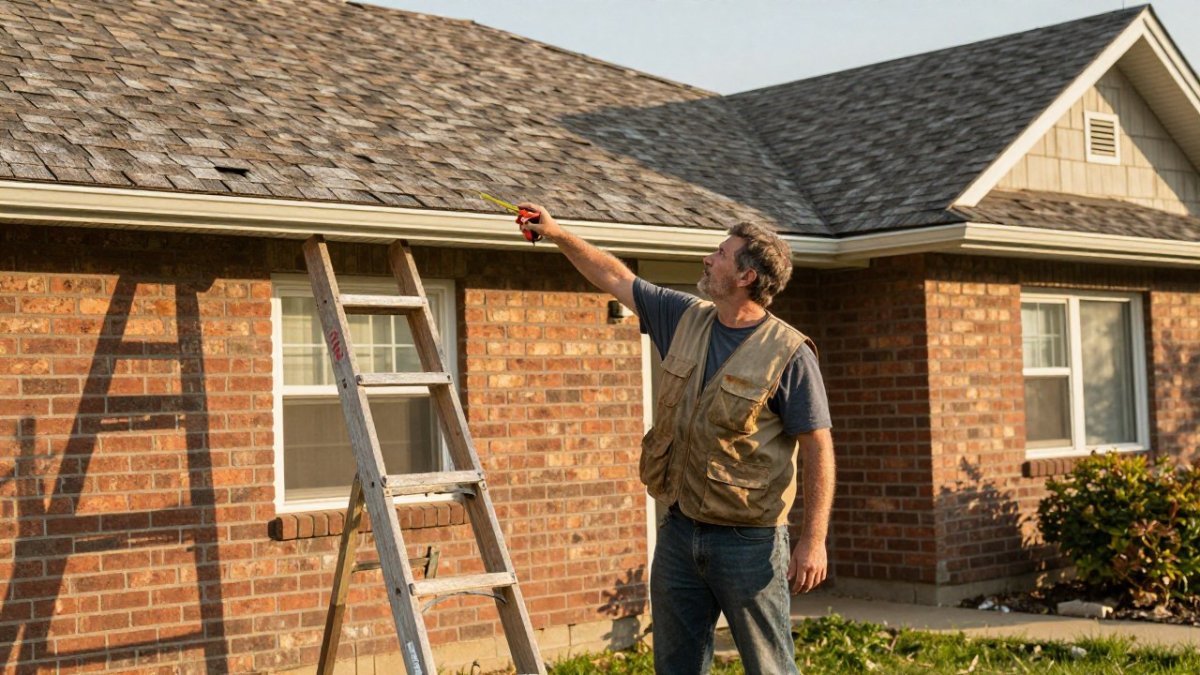
Step 1: Check the shingles. Look for lifted tabs, missing pieces, and curling edges.
Step 2: Check the flashing. Look at metal flashing around chimneys, vents, skylights, and valleys.
Step 3: Clear the gutters and eaves. Remove leaves, debris, and standing water.
Step 4: Trim nearby branches. Cut back limbs that could rub or break against the roof in high winds.
Step 5: Secure loose items. Check for loose satellite dishes, antennas, or roof-mounted gear and tighten or remove them.
Keep a simple list of what you found and what you fixed.
Here is a quick reference for the six preparation steps covered above.
Step | What to do | Focus area |
Step 1 | Check the shingles | Lifted tabs, missing pieces, curling edges |
Step 2 | Check the flashing | Chimneys, vents, skylights, valleys |
Step 3 | Clear the gutters and eaves | Leaves, debris, standing water |
Step 4 | Trim nearby branches | Limbs that could rub or break against the roof |
Step 5 | Secure loose items | Satellite dishes, antennas, roof-mounted gear |
Step 6 | Document the roof's condition | Dated photos taken from the ground |
Signs of Roof Wind Damage to Check For
After a strong Chinook, look for signs that the roof has been stressed. Some damage is obvious, while other damage hides until water finds a path inside.
Visible signs from the ground:
Shingles missing or lying in the yard
Lifted or creased shingle tabs
Bent or displaced flashing
Dents or punctures in metal vents or flashing
Exposed underlayment or dark patches on the roof
Signs inside the home:
Water stains on ceilings or upper walls
Peeling paint or bubbling drywall near the top floor
A musty smell in the attic
Damp insulation or dripping in the attic after a melt
Watch out: Do not assume a small leak is minor. Water can travel along rafters and show up far from the actual entry point, so a stain on a ceiling may come from a damaged shingle several feet away.
If you see any of these signs, note the date and take photos before doing anything else. This record helps with repairs and any insurance claim.
Safe Ground-Level Inspection After High Winds
The safest way to check a roof after a Chinook is from the ground. Walking on a roof after high winds is risky, because shingles can be loose, slick, or cracked, and a fall from height can cause serious injury.

A homeowner can do a useful check with a few simple steps:
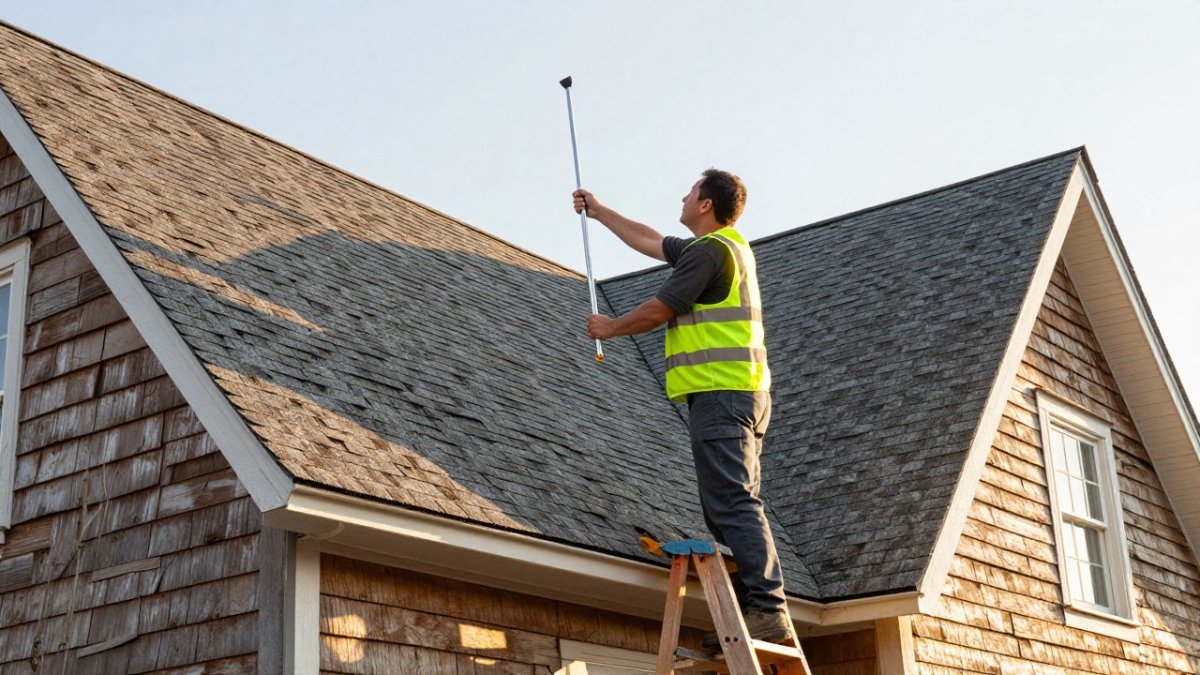
Walk the full perimeter of the house and look up at each roof slope
Use binoculars to see the ridge, edges, and valleys more clearly
Look for debris on the lawn, which often shows what came off the roof
Check gutters and downspouts for shingle granules or pieces
Photograph anything unusual from several angles
Watch out: Never climb onto a wet, icy, or windy roof. If something looks wrong, leave the roof alone and call a professional instead of trying to fix it yourself.
Ground-level checks catch many problems, but they cannot show everything. Hidden damage under shingles or in the attic may need a closer look from a qualified roofer.
Roof Maintenance to Prevent Leaks During Snowmelt and Freeze-Thaw
Snowmelt and freeze-thaw cycles are a common cause of roof leaks after a Chinook. Water that moves under loose shingles or into small gaps can freeze overnight and push those gaps wider, so the damage from one warm, windy day can show up as a leak days later. A Chinook-specific maintenance schedule works better than general seasonal advice because the risk window is short and predictable.
Before the event
Clear gutters and downspouts from autumn onward so meltwater has a path off the roof
Replace cracked or lifted flashing before the first cold snap
Re-seal or replace loose shingles while the weather is calm
Confirm attic ventilation is working so the roof deck stays closer to outdoor temperature and refreezing is less severe
Photograph the roof from the ground as a baseline for any later claim
During the event
Watch for water at ceilings, upper walls, and attic rafters, and note the time it appears
Keep snow away from the eaves with a roof rake used from the ground, never by walking the roof
Check that downspouts are discharging away from the foundation as meltwater runs
Avoid climbing onto the roof while it is wet, icy, or windy
After the event
Walk the perimeter and look for missing shingles, debris, and displaced flashing
Check the attic for damp insulation, staining, or a musty smell
Clear any refrozen ice dams at the eaves before the next melt
Repair loose shingles soon after you spot them, before the next freeze
Update your photo record and notes
Watch out: Ice dams at the eaves are a sign of uneven roof temperature, not just bad luck. If they recur every Chinook, the fix is usually attic insulation and ventilation rather than repeated chipping, and a roofer or energy auditor can confirm which is the cause.
A regular seasonal check still helps: look over the roof twice a year, once in spring and once in autumn, and treat each forecast Chinook as a short maintenance window rather than a surprise.
Wind-Damaged Shingles Repair: When to Call a Professional
Some wind damage is a same-day fix; some is a claim. Sorting the two before you call anyone saves money and prevents a small problem from becoming a wet attic.
What a careful homeowner can handle from the ground:
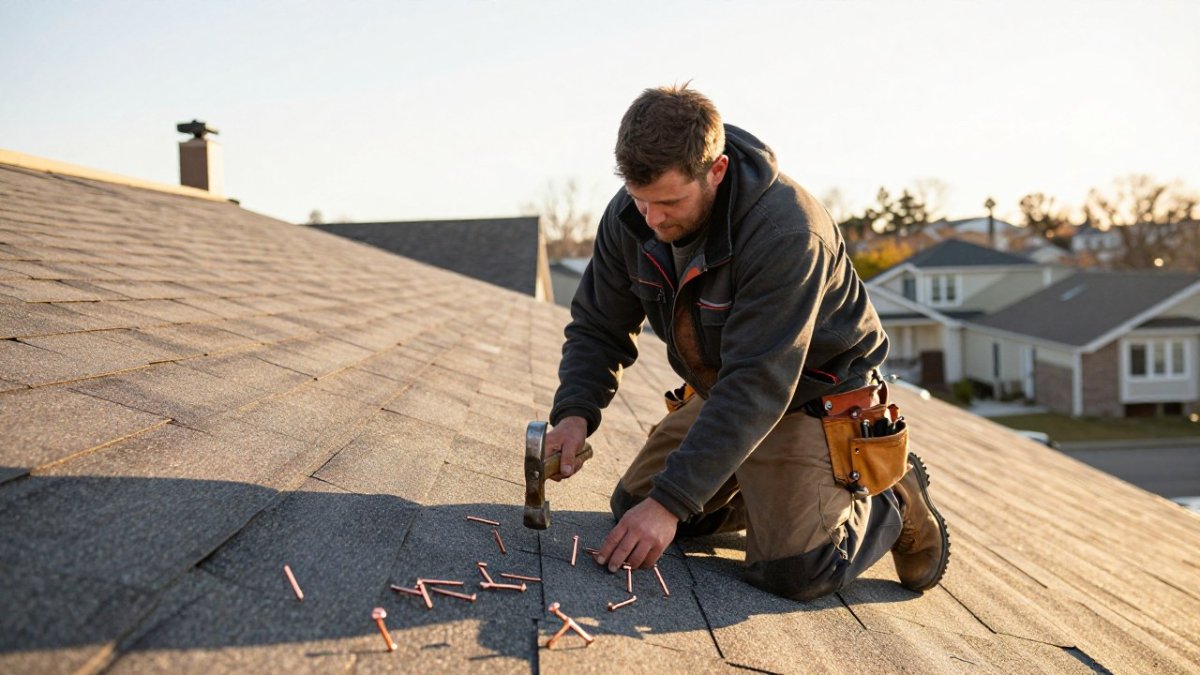
Re-sealing a single lifted tab with roofing cement, if you can reach it safely from a ladder and the shingle is not cracked
Removing branches or debris that are resting on the roof without walking on it
Clearing gutters so meltwater does not back up under the eaves
Placing a tarp over an exposed area only if you can do so safely from the ground or a stable ladder
What needs a licensed roofer:
Several missing or lifted shingles across one slope, or any missing ridge caps
Damage to underlayment, decking, or sheathing
Water stains in the attic or on ceilings
Bent, lifted, or separated flashing around chimneys, vents, skylights, or valleys
Any area you cannot see or reach safely from the ground
A roofer can tell whether shingles need replacement or just resealing, and can check for hidden damage a ground-level look will miss.
Watch out: Do not walk a roof after a Chinook to "just check" a lifted shingle. Wind-loosened shingles can be slick or cracked, and a fall from height is a far worse outcome than a repair bill.
Temporary protection to prevent further water damage
If a Chinook has opened the roof and more precipitation is forecast, the priority is to limit interior water damage until a roofer arrives:
Photograph the damage from the ground before you cover anything.
Place buckets under active drips and move furniture or electronics away from the path of water.
If you can do so safely, tarp the exposed area, overlapping the tarp over the ridge and weighting the lower edge. Never climb onto a wet, icy, or windy roof.
Puncture a small drain hole in a sagging ceiling bulge to release trapped water into a bucket rather than letting the drywall collapse.
Call a roofer the same day and note the time of the call.
Documenting damage for an insurance claim
Insurance coverage depends on the policy and the cause of damage, so keeping a clear record matters. A practical file includes:
Dated photos of the roof from the ground before and after the event, plus photos of any debris in the yard
Photos of interior stains, with a tape measure or coin for scale
Your pre-Chinook photos and notes, which establish the roof's condition before the wind
Receipts for any emergency tarping or temporary repairs
The date, time, and wind conditions of the event, if you noted them
A written summary from the roofer describing the damage and the cause
Contact your insurer before authorizing permanent repairs, and keep the damaged materials until the adjuster has seen them. If you need urgent help, emergency roof repair services explains what to do in the first hour. A licensed contractor can document the work so the file is clear. For a larger repair, you can get a free residential roof estimate from First Class Roofing & Renovations Inc.
Booking a Roof Inspection Before the Next Chinook Season
A professional inspection is the most thorough way to prepare for the next wind season. You can get a free residential roof estimate to see what the process involves before you book.
Plan the inspection for early autumn, before the first heavy snow. That gives time to make repairs before the Chinook and freeze-thaw cycles start. Bring your photos and notes from your ground-level checks so the roofer knows where to look.
When you are ready, get in touch with First Class Roofing & Renovations Inc to ask about an inspection of your roof's condition.
Frequently Asked Questions
How can I protect my roof from Chinook winds?
Start by clearing gutters and eaves so meltwater drains freely, trimming tree branches that could fall onto the roof, and securing loose flashing and vent caps. Check that shingles are sealed and not lifting at the edges before the season begins. Clearing snow from the roof edges before a warm spell also reduces the weight and water pressure that can push water under shingles. A roof inspection by a licensed contractor each fall gives you a documented baseline to compare against after strong winds.
What roof damage can Chinook winds cause?
Chinook winds commonly lift, curl or tear off asphalt shingles, especially at roof edges, ridges and corners where uplift is strongest. Gusts can also loosen flashing around chimneys and vents and dislodge gutters or fascia. Rapid snowmelt that follows can push water under lifted shingles, causing leaks and interior water damage. Wind can also drive debris into valleys and gutters, which blocks drainage and adds stress to the roof covering.
When should I call a roofer after strong winds?
Call a roofer if you see missing or displaced shingles, visible granule loss in piles, bent flashing, or any sign of water entering the attic or ceilings. Get a professional assessment promptly if the roof has leaked, even slightly, because water can travel along framing before it shows up indoors. If you need emergency repairs, a temporary covering can prevent further damage while you wait for a full repair. Keep photos and notes of the damage before any work begins, as they support any insurance claim.
Does roof maintenance help reduce wind damage?
Yes. Regular maintenance keeps the roof covering sealed and the drainage system working, which reduces the likelihood that wind will find a weak point. Replacing cracked sealant, re-securing loose fasteners, cleaning gutters and maintaining eaves all lower the risk of lifted shingles and water intrusion. A seasonal inspection, particularly in late fall before Chinook season, catches small issues while they are inexpensive to fix. Maintenance does not eliminate wind risk, but it makes a roof far more resistant to damage.

Comments